AI Head-to-Head
Compare The Psychology of Money vs Tamil lexicography
Which book deserves a spot on your reading list next? Explore our side-by-side comparison of summaries, lessons, and buying options.

Finance
The Psychology of Money
by Morgan Housel
★★★★★
5.0
Buy Options
| Pages | 256 |
| Difficulty Level | Beginner |
| Est. Reading Time | 6.4 hrs |
| Publish Year | 2020 |
Uncategorized
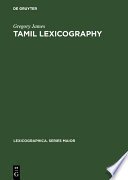
Tamil lexicography
by Gregory James
☆☆☆☆☆
0.0
Buy Options
| Pages | 292 |
| Difficulty Level | Intermediate |
| Est. Reading Time | 7.3 hrs |
| Publish Year | 2017 |
🎯
Who Should Read Which?
Book 1, "The Psychology of Money," targets a general audience interested in personal finance, behavioral economics, and practical wisdom regarding money management, regardless of their financial background. Book 2, "Tamil lexicography," caters to a highly specialized academic audience, likely linguists, Tamil scholars, researchers, or students focusing on lexicography or the Tamil language specifically.
💡
Core Takeaway Comparison
The core takeaway from Book 1 is that financial success is often less about intelligence and more about behavior, offering insights into human psychology's role in wealth building and decision-making. Book 2's core takeaway, based on its title, would likely revolve around the principles, history, and methodologies involved in compiling dictionaries for the Tamil language, providing a deep dive into linguistic and cultural aspects of Tamil vocabulary.
✍️
Writing Style & Complexity
Book 1 adopts an accessible, narrative style, presenting complex financial ideas through 19 short stories and anecdotes, making it engaging and easy to understand for a broad readership. Book 2, given its academic title "Tamil lexicography," is expected to have a highly technical, scholarly, and formal style, demanding a specific background in linguistics or Tamil studies for comprehension.
👑
The Final Verdict
For readers seeking practical insights into personal finance, human behavior, and wealth, Book 1 is the clear choice and should be read first. For those with a specific academic interest in the intricacies of the Tamil language and dictionary creation, Book 2 would be relevant, but only if that niche subject aligns with their immediate goals and existing knowledge.