AI Head-to-Head
Compare The Lean Startup vs Tamil lexicography
Which book deserves a spot on your reading list next? Explore our side-by-side comparison of summaries, lessons, and buying options.
Business
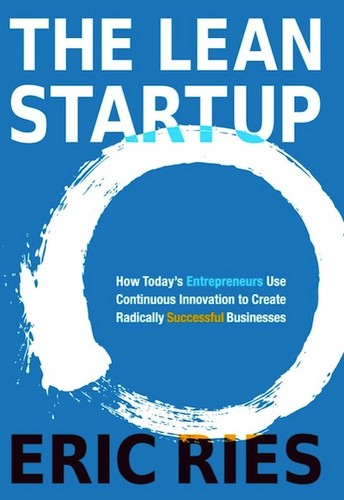
The Lean Startup
by Eric Ries
★★★★★
5.0
Buy Options
| Pages | 336 |
| Difficulty Level | Intermediate |
| Est. Reading Time | 8.4 hrs |
| Publish Year | 2011 |
Uncategorized
Tamil lexicography
by Gregory James
☆☆☆☆☆
0.0
Buy Options
| Pages | 292 |
| Difficulty Level | Intermediate |
| Est. Reading Time | 7.3 hrs |
| Publish Year | 2017 |
🎯
Who Should Read Which?
Book 1, "The Lean Startup," is ideal for entrepreneurs, startup founders, product managers, innovators, and anyone interested in building and scaling businesses efficiently. Book 2, "Tamil lexicography," is aimed at linguists, scholars of the Tamil language, researchers in lexicography, and advanced students with a specific interest in the historical and theoretical aspects of dictionary-making for Tamil.
💡
Core Takeaway Comparison
The core takeaway from Book 1 is a methodology for developing products and businesses with continuous innovation, validated learning, and rapid iteration to reduce risk and increase success rates. Book 2's core takeaway would be an in-depth understanding of the principles, history, and practice of compiling dictionaries for the Tamil language, offering insights into its linguistic and cultural evolution.
✍️
Writing Style & Complexity
Book 1 likely employs a practical, accessible, and potentially anecdotal style, featuring case studies and actionable advice suitable for a professional business audience. Book 2, being an academic text on lexicography, would almost certainly have a formal, technical, and highly specialized writing style, potentially dense with linguistic terminology and historical analysis.
👑
The Final Verdict
These two books serve entirely different purposes and audiences. If your goal is to learn about modern business strategies, product development, and entrepreneurship, start with "The Lean Startup." If you are a linguist, a scholar of Tamil, or specifically interested in the academic field of dictionary compilation for the Tamil language, then "Tamil lexicography" would be the appropriate choice. There is no overlap in their intended readership or subject matter.