AI Head-to-Head
Compare The Psychology of Money vs T. P.'s Weekly
Which book deserves a spot on your reading list next? Explore our side-by-side comparison of summaries, lessons, and buying options.

Finance
The Psychology of Money
by Morgan Housel
★★★★★
5.0
Buy Options
| Pages | 256 |
| Difficulty Level | Beginner |
| Est. Reading Time | 6.4 hrs |
| Publish Year | 2020 |
Uncategorized
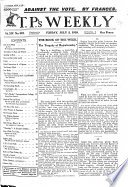
T. P.'s Weekly
by Thomas Power O'Connor
☆☆☆☆☆
0.0
Buy Options
| Pages | 860 |
| Difficulty Level | Intermediate |
| Est. Reading Time | 21.5 hrs |
| Publish Year | 1909 |
🎯
Who Should Read Which?
Book 1, "The Psychology of Money," is for anyone seeking to improve their financial understanding and behavior, from beginners to experienced investors, who are interested in the psychological aspects of money management. Book 2, "T. P.'s Weekly," given its title and lack of description, is likely for readers interested in historical periodicals, journalism from its era, or the specific work and context of Thomas Power O'Connor. Its audience would be more niche, potentially researchers or enthusiasts of early 20th-century culture.
💡
Core Takeaway Comparison
The core takeaway from Book 1 is that financial success is heavily influenced by human psychology and behavior, rather than just market knowledge, emphasizing the importance of emotional intelligence and discipline in managing money. For Book 2, without a description, the core takeaway would generally be a historical snapshot of general interest topics, news, and cultural commentary from the period of its publication, reflecting the diverse content typical of a weekly periodical.
✍️
Writing Style & Complexity
Book 1 employs an accessible and engaging narrative style, presenting complex financial psychology through 19 short stories and anecdotes, making it easy to understand for a broad audience. Book 2, as a "weekly," would likely feature a varied journalistic style, potentially encompassing essays, articles, and literary pieces. The complexity would depend on the specific content and the common language/writing conventions of its publication period, which could range from formal to more conversational.
👑
The Final Verdict
If your goal is practical self-improvement, gaining insights into personal finance, and understanding human behavior around money, Book 1, "The Psychology of Money," is the clear recommendation and should be read first. If you have a specific interest in historical periodicals, the cultural context of a particular era, or the works of Thomas Power O'Connor, then Book 2, "T. P.'s Weekly," might be relevant, but it serves a very different purpose and is unlikely to offer contemporary financial or self-help advice.