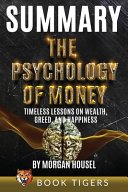
Summary of The Psychology of Money
Timeless Lessons on Wealth, Greed, and Happiness by Morgan Housel
by Book Tigers
Pages
98
Reading Level
Intermediate
Est. Time
2.5 hrs
Description
This e-book, The Psychology of Money: Timeless Lessons on Wealth, Greed, and Happiness, by Morgan Housel, is an unofficial summary and analysis of the original book.
ISBN-13: 9781774900505
Publisher: Unknown Publisher
Language: English
Publish Year: 2021
AI Synthesis & Core Summary
The Psychology of Money by Morgan Housel, as summarized by Book Tigers, posits that financial success is less about what you know and more about how you behave. It argues that traditional finance often focuses on mathematical models and data, overlooking the profound impact of human emotions, biases, and unique personal experiences on financial decisions. The book emphasizes that even highly intelligent people can make poor financial choices if they fail to understand their own psychological drivers, while ordinary individuals can achieve extraordinary results through consistent, rational behavior rooted in psychological awareness. It delves into the idea that money management is not a hard science but a soft skill, deeply intertwined with one's personal history, worldview, and emotional makeup.
The core thesis revolves around several key principles: the powerful, often underestimated, force of compounding, the significant and unavoidable roles of luck and risk in financial outcomes, the critical importance of defining 'enough' to avoid the pitfalls of insatiable desire, and the intrinsic value of financial independence over material possessions. Housel illustrates these concepts with compelling anecdotes from history and real-world examples, highlighting how our individual pasts shape our perception of money and risk, making universal financial advice often ineffective. He stresses that what seems rational to one person might appear insane to another, simply due to differing life experiences and financial horizons.
Ultimately, the book advocates for simplicity, patience, and a long-term perspective in financial planning. It encourages readers to understand and manage their own psychological biases, to cultivate humility in the face of uncertainty, and to prioritize financial flexibility and control over time. By acknowledging the unpredictable nature of markets and life, and by focusing on what one can control—namely, one's own behavior and expectations—individuals can foster a healthier relationship with money, leading to greater financial well-being and contentment, rather than merely chasing higher returns or status.
AI Concept Mind-Map
Get This Book
Looking to add this masterpiece to your bookshelf? Compare prices and buy directly using our trusted partners:
🔔 Get Price Drop Alerts
Enter your email to receive an instant notification when this book's price drops on Amazon or Flipkart.
As an Associate, BOOKLOVE earns from qualifying purchases. Read our full Affiliate Disclosure.
Critical Lessons & Takeaways
- Understanding your own psychology and behavioral biases is more crucial for financial success than pure intelligence or complex models.
- Compounding is a powerful force, but its benefits are primarily realized through patience and consistency over long periods.
- Luck and risk play significant, often underestimated, roles in financial outcomes; acknowledge them to avoid hubris and self-blame.
- Defining 'enough' is essential to prevent the endless pursuit of more, which can lead to unnecessary risk and unhappiness.
- Financial independence and the control over your time are among the greatest dividends money can buy, transcending material wealth.
Famous Quotes & Key Sayings
- "The hardest financial skill is getting the goalpost to stop moving."
- "Money’s greatest intrinsic value—and this can’t be overstated—is its ability to give you control over your time."
- "Your personal experiences with money make up maybe 0.00000001% of what’s happened in the world, but 80% of how you think the world works."
- "Saving is the gap between your ego and your income."
Key Figures & Characters
AI Book Assistant
Ask about quotes, characters, lessons...
Offline Study Companion
Download the complete AI Summary and Critical Lessons as a beautifully formatted PDF to read offline.
📅 Create AI Reading Plan
Generate a week-by-week timeline custom-tailored to your learning goals and timeline.
Community Reviews (0)
No reviews posted yet. Be the first to share your thoughts!
Similar Books & Comparisons
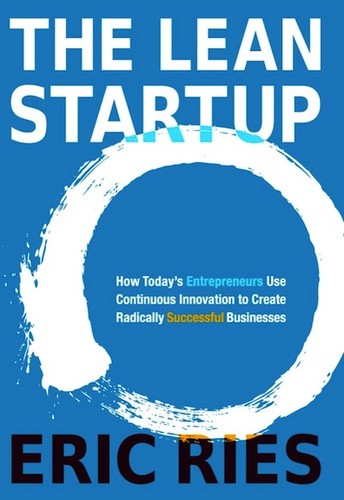
The Lean Startup
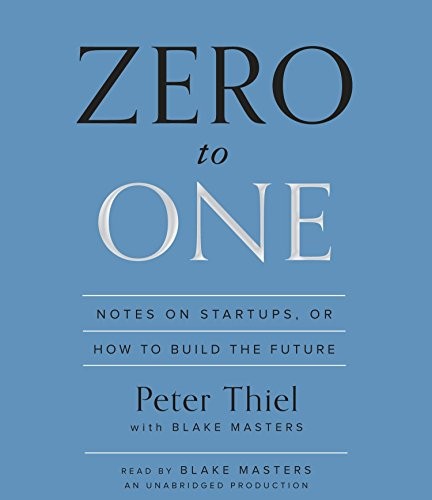
Zero to One

The Psychology of Money